
Lower Back Pain in Dubai
Written and medically reviewed by Dr. Gerry Nastasia, DC, DABCO, DIANM — Last reviewed: June 2026
Non-surgical chiropractic treatment for lumbar spine pain, lumbar disc herniation, muscle strain, facet joint dysfunction, and chronic lower back pain from Dr. Gerry Nastasia in Umm Suqeim 2, Dubai.
Lower back pain treatment in Dubai at Dr. Gerry Nastasia focuses exclusively on the lumbar spine—the five vertebrae (L1-L5) and sacrum that bear the full mechanical load of the upper body and are the most common site of musculoskeletal pain in Dubai’s working population. Using Cox Flexion-Distraction Decompression Manipulation—exclusively available in the Middle East at this clinic—Non-Surgical Spinal Decompression, McKenzie Method® MDT®, and a full multidisciplinary care team including physiotherapy and massage, Dr. Gerry diagnoses the precise lumbar structure generating your pain and resolves it without surgery, injections, or long-term medication. Double Board Certified in Neuromusculoskeletal Medicine and Chiropractic Orthopedics (DABCO, DIANM) and a University of Pittsburgh certified Primary Spine Practitioner with 36+ years of experience, Dr. Gerry is one of the most qualified non-surgical lumbar spine specialists in Dubai.
36+ Years
International experience
Double Board Certified
Neuromusculoskeletal Medicine & Chiropractic Orthopedics
Non-Surgical
No drugs, no operations
Dubai Based
Umm Suqeim 2, open 6 days
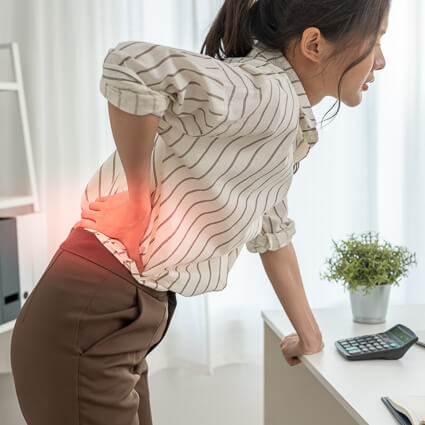
Related conditions & treatments at our Dubai clinic:
- Back Pain Treatment Dubai — full back pain overview — all spinal regions
- Sciatica Treatment Dubai — sciatic nerve & leg pain from lumbar disc compression
- Slip Disc Treatment Dubai — herniated & bulging lumbar disc care
- Neck Pain Treatment Dubai — cervical spine pain, tech neck & radiculopathy
- Shoulder Pain Treatment Dubai — frozen shoulder, rotator cuff & AC joint
- Sports Injury Chiropractor Dubai — acute & chronic sports injuries
Understanding the Lumbar Spine and Why It Causes Pain
The lumbar spine is the lowest and most mechanically stressed region of the vertebral column. It consists of five large vertebrae—L1 through L5—stacked above the sacrum, which forms the base of the spine and connects to the pelvis. The lumbar spine supports the entire weight of the upper body, absorbs the forces of walking, running, and lifting, and allows the trunk to flex, extend, and rotate.
Between each pair of lumbar vertebrae sits an intervertebral disc—a fibrocartilaginous structure with a tough outer ring (annulus fibrosus) and a gel-like inner core (nucleus pulposus). These discs act as shock absorbers and allow movement. The nerve roots that exit the lumbar spine at each level travel into the legs, controlling sensation and motor function all the way to the feet.
This combination of high mechanical load, disc-dependent shock absorption, and proximity to the major leg nerve roots makes the lumbar spine the most common site of musculoskeletal pain in the human body—and the most frequent complaint seen by Dr. Gerry.
The lumbar nerve roots — why lower back pain radiates into the leg
One of the most important aspects of lumbar spine pain is its ability to radiate into the leg—producing symptoms far from the actual source of the problem. Each lumbar nerve root, when compressed by a herniated disc or narrowed foramen, produces symptoms in a specific dermatomal pattern:
| Level | Nerve root | Common symptoms when compressed |
| L1-L2 | L1, L2 | Groin pain, inner thigh numbness |
| L2-L3 | L2, L3 | Front thigh pain, hip flexor weakness |
| L3-L4 | L3, L4 | Knee pain, quad weakness, reduced knee reflex |
| L4-L5 | L4, L5 | Outer shin pain, big toe weakness, foot drop risk |
| L5-S1 | L5, S1 | Sciatica down the leg, calf weakness, reduced ankle reflex |
When the lumbar disc at L4-L5 or L5-S1 compresses the sciatic nerve root, the result is Sciatica — the shooting leg pain that is one of the most debilitating presentations of lower back pain. Understanding which nerve root is affected is critical to choosing the right treatment — and is established through Dr. Gerry’s thorough neurological examination at the first consultation.
Causes of Lower Back Pain in Dubai
Lower back pain in Dubai’s population arises from a wide range of structural, postural, and lifestyle factors. The following are the most common lumbar conditions treated at our clinic:
Lumbar disc herniation — slip disc at L4-L5 or L5-S1
The most common serious cause of lower back pain in Dubai. When the nucleus pulposus of a lumbar disc ruptures through the annulus fibrosus, it can press directly on the adjacent nerve root—causing local lumbar pain combined with radiating leg pain (sciatica). The L4-L5 and L5-S1 levels are affected in the vast majority of cases. See our dedicated Slip Disc Treatment Dubai page for comprehensive information on disc herniation treatment.
Lumbar muscle strain and ligament sprain
Acute lumbar muscle strain—the most common cause of sudden-onset lower back pain—occurs when the paraspinal muscles or spinal ligaments are overstretched or torn. Common triggers include sudden awkward movements, heavy lifting with poor technique, sports impacts, and prolonged static postures. While most strains resolve within days to weeks, without addressing the underlying spinal joint dysfunction and muscle imbalances, recurrence is highly likely.
Lumbar facet joint syndrome
The lumbar facet joints—the paired small joints at the back of each vertebral level—are a frequent but underdiagnosed source of lower back pain. Facet joint pain typically presents as a localized, one-sided aching pain that worsens with extension (arching the back), rotation, and prolonged standing, and eases with sitting and flexion. It is common in patients with degenerative disc disease, as disc height loss increases load on the facet joints. Chiropractic adjustments and dry needling are highly effective for lumbar facet syndrome.
Degenerative disc disease (DDD)
Degenerative disc disease is the age-related breakdown of lumbar intervertebral discs—loss of disc height, water content, and elasticity—that leads to chronic stiffness, aching lower back pain, and increased vulnerability to disc herniation. It is accelerated by sedentary lifestyle, smoking, repetitive heavy loading, and genetic factors. Cox Flexion-Distraction Decompression Manipulation and Non-Surgical Spinal Decompression are the most effective treatments for lumbar DDD, creating the negative intradiscal pressure that draws fluid and nutrients back into degenerated discs.
Lumbar spinal stenosis
Lumbar spinal stenosis is the narrowing of the spinal canal in the lumbar region, compressing the nerve roots within. It is more common in patients over 50 and produces a characteristic pattern: lower back pain and leg pain (neurogenic claudication) that worsens with walking and standing and is relieved by sitting or bending forward. Cox Flexion-Distraction Decompression Manipulation is one of the most clinically validated non-surgical treatments for lumbar stenosis—opening the spinal canal without surgery.
Sacroiliac (SI) joint dysfunction
The sacroiliac joints connect the sacrum (base of spine) to the pelvis on each side. SI joint dysfunction—either excessive movement (hypermobility) or restricted movement (hypomobility)—produces pain at the base of the spine, buttock, and sometimes the outer hip or thigh. It is frequently confused with lumbar disc pain and is a common cause of lower back pain in pregnant women, athletes, and patients who have had lumbar fusion surgery. SOT (Sacro Occipital Technique) and Diversified adjustment techniques are particularly effective for SI joint correction.
Chronic lower back pain — lumbago
Chronic lower back pain—often called lumbago—is defined as lumbar pain persisting for more than 3 months. It frequently involves a combination of disc degeneration, facet joint dysfunction, muscle imbalance, and nervous system sensitization. Many patients with chronic lower back pain in Dubai have previously tried physiotherapy, pain medication, and steroid injections without lasting results. Dr. Gerry’s multidisciplinary approach—addressing the structural, soft tissue, and neurological components simultaneously—is particularly effective for chronic lumbago that has not responded to other treatments.
Lower back pain in Dubai’s office workers
Dubai’s professional environment is a major driver of lower back pain. Sitting for 8 to 10 hours a day—even with good ergonomic equipment—increases lumbar intradiscal pressure significantly compared to standing or walking. The hip flexors shorten, the lumbar extensors weaken, the sacroiliac joints stiffen, and the lumbar discs gradually dehydrate. Over months and years this creates the perfect conditions for facet syndrome, disc herniation, and chronic lumbar pain. Dr. Gerry uses McKenzie Method® assessment and identifies the specific lumbar movement pattern that relieves this type of pain—and teaches patients the self-care exercises to reverse it.
Lower Back Pain Treatment Techniques at Our Dubai Clinic
Every treatment plan is built around a precise clinical diagnosis—not a generic protocol. The following are the verified techniques used by Dr. Gerry specifically for lumbar conditions:
| Primary chiropractic techniques | |
| Cox Flexion-Distraction Decompression Manipulation | Only provider in the Middle East — primary lumbar disc & nerve treatment |
| Diversified Technique | Precise lumbar & sacral joint adjustments |
| McKenzie Method® (MDT®) | Mechanical Diagnosis & Therapy — directional movement for lumbar pain |
| Impulse IQ® | Instrument-assisted gentle lumbar adjustment |
| Logan Basic Technique | Low-force sacral & lumbar structural balancing |
| Sacro Occipital Technique (SOT) | Pelvis, sacrum & lumbar structural correction |
| Adjunctive & supportive services | |
| Non-Surgical Spinal Decompression | Computer-controlled lumbar disc decompression |
| Thompson Technique | Drop-table assisted lumbar & pelvic correction |
| IASTM | Instrument-Assisted Soft Tissue Mobilisation — lumbar & gluteal fascia |
| Dry Needling | Paraspinal, gluteal & piriformis trigger point release |
| Low Level Light Therapy (Cold Laser) | Lumbar disc & nerve inflammation relief |
| Physiotherapy | Core stabilisation & lumbar rehabilitation |
| Massage Therapy | Lumbar paraspinal & soft tissue tension relief |
Cox Flexion-Distraction Decompression Manipulation — gold standard for lumbar pain
Cox Flexion-Distraction Decompression Manipulation is Dr. Gerry’s primary treatment for lumbar disc herniations, spinal stenosis, and chronic lower back pain—and he is the only certified Cox provider in the entire Middle East. The technique uses a precision-engineered segmented table to apply a gentle, rhythmic flexion and distraction motion to the lumbar spine. Peer-reviewed research demonstrates this technique reduces intradiscal pressure at the treated level by up to 50%, widens the spinal canal by up to 28%, opens the intervertebral foramina to relieve nerve root compression, and restores normal segmental lumbar motion. It is gentle enough to be used in the acute phase of severe lower back pain and is suitable for post-surgical patients, elderly patients with osteoporosis, and patients with significant nerve involvement.
McKenzie Method® (MDT®) — the directional movement approach to lumbar pain
The McKenzie Method® (Mechanical Diagnosis and Therapy®) is a globally validated assessment and treatment system that classifies lumbar pain by its mechanical behavior—specifically, which movements centralize the pain (move it from the leg back toward the spine) and which peripheralize it (push it further down the leg). This classification determines the precise directional exercises that drive the herniated disc material away from the nerve root and the specific movements to avoid during recovery. For Dubai’s office workers with lumbar pain, MDT® also identifies the sitting postures and workstation adjustments that reduce lumbar disc load throughout the working day.
Non-Surgical Spinal Decompression for lumbar discs
Non-Surgical Spinal Decompression applies computer-controlled motorised traction to the specific lumbar disc level, creating negative intradiscal pressure that encourages herniated nucleus material to retract and promotes rehydration of degenerated discs. It is particularly valuable for lumbar disc herniations and degenerative disc disease—especially when patients have not responded to physiotherapy or pain management, or where the herniation is too large for manual techniques alone.
Chiropractic adjustments for lumbar and sacral joints
Diversified lumbar adjustments, Logan Basic sacral corrections, and SOT pelvic corrections restore normal movement to restricted lumbar vertebrae, sacroiliac joints, and the lumbosacral junction. These adjustments reduce the reflex muscle spasm that perpetuates acute lower back pain, relieve facet joint irritation, and restore the normal spinal biomechanics that protect the lumbar discs from further injury.
Dry needling for lumbar and gluteal muscles
The paraspinal muscles adjacent to the lumbar spine—multifidus, iliocostalis, quadratus lumborum—and the gluteal and piriformis muscles develop active trigger points in virtually all cases of significant lower back pain. These trigger points create a pain cycle that maintains lumbar pain even after the underlying disc or joint problem is resolving. Dry needling provides rapid deactivation of these trigger points, restoring normal muscle function and significantly reducing the pain experience.
IASTM for lumbar fascia and soft tissue
The thoracolumbar fascia—the large sheet of connective tissue that covers the lumbar paraspinal muscles—frequently develops thickening, adhesions, and restricted mobility in patients with chronic lower back pain. IASTM (Instrument-Assisted Soft Tissue Mobilization) treats this fascial restriction directly, improving lumbar mobility and reducing the mechanical load on the underlying spinal joints.
Cold laser therapy for acute lumbar pain and disc inflammation
Low Level Light Therapy (cold laser) reduces the inflammatory mediators around compressed lumbar nerve roots and within the lumbar facet joints—providing significant pain relief during the acute phase of lower back pain without medication. It is particularly valuable for patients in whom manual techniques are initially too painful to tolerate and is used alongside Cox therapy and decompression from the first session.
Physiotherapy — lumbar core stabilisation
The deep lumbar stabilisers—multifidus and transversus abdominis—are consistently shown to atrophy in patients with chronic lower back pain. Without deliberate rehabilitation of these muscles, the lumbar discs and facet joints remain vulnerable to re-injury regardless of how well the acute pain episode resolves. Dr. Gerry’s physiotherapy rehabilitation programme rebuilds this deep lumbar stability progressively—ensuring that recovery is durable, not just temporary.
Acute vs Chronic Lower Back Pain — Different Approaches
Acute lower back pain
Acute lower back pain—sudden onset, typically following a specific incident—is managed in the early phase with cold laser therapy to control inflammation, gentle Cox Flexion-Distraction Decompression Manipulation to relieve nerve pressure and restore lumbar movement, and McKenzie Method® assessment to identify the directional self-care exercises that provide immediate relief. The goal is to restore normal lumbar function as quickly as possible, prevent the condition from becoming chronic, and identify the structural cause so it can be fully resolved.
Chronic lower back pain — lumbago
Chronic lower back pain requires a more layered approach—addressing the accumulated structural dysfunction, soft tissue changes, and neurological sensitization that develop over months and years of persistent pain. Dr. Gerry’s approach combines Cox therapy and Non-Surgical Spinal Decompression for the disc and joint components, dry needling and IASTM for the soft tissue components, and progressive physiotherapy rehabilitation for the muscular stability component. Many patients with chronic lower back pain who have been told “nothing more can be done” achieve significant improvement through this comprehensive, diagnosis-driven approach.
What to Expect at Your Lower Back Pain Consultation in Dubai
Your first appointment includes a thorough lumbar spine assessment:
- Full health history—onset, mechanism, pain location, aggravating and relieving factors, prior treatment
- Lumbar range of motion—flexion, extension, lateral flexion, and rotation
- MDT® mechanical assessment—identifying centralization and peripheralization patterns
- Orthopaedic tests—straight leg raise, Kemp’s, FABER, SI joint provocation tests
- Neurological examination—lower limb reflexes, dermatomal sensation (L1-S1), and muscle strength testing
- Postural and pelvic assessment—lumbar lordosis, pelvic tilt, leg length discrepancy
- Review of any MRI, CT, or X-ray reports you bring
Dr. Gerry will explain your diagnosis in plain language, identify the specific lumbar structure causing your pain, and give you a clear treatment plan with realistic recovery expectations. In most cases, treatment begins on the same day as your first consultation.
Why Choose Dr. Gerry Nastasia for Lower Back Pain Treatment in Dubai
- Only Cox Flexion-Distraction Decompression Manipulation provider in the Middle East—the most clinically validated non-surgical lumbar spine treatment in the world, exclusively available at this Dubai clinic
- Double Board Certified—DABCO, DIANM (Neuromusculoskeletal Medicine and Chiropractic Orthopedics)—the highest post-doctoral qualifications in non-surgical lumbar spine care
- University of Pittsburgh certified Primary Spine Practitioner (PSP)—serves as the point-of-entry provider for lumbar spine disorders: full assessment, diagnosis, and management without referral required
- 36+ years of clinical experience—treating lower back pain across solo practice, group practice, hospital settings, and academic institutions in the USA, Bermuda, and Dubai
- McKenzie Method® certified (MDT®)—one of the most evidence-based assessment and treatment systems for lumbar disc pain, taught to patients as self-management tools
- Full multidisciplinary toolkit—Cox therapy, Non-Surgical Spinal Decompression, McKenzie MDT®, dry needling, IASTM, cold laser, physiotherapy, and massage—every component of lumbar care under one roof
- Former President, Emirates Chiropractic Association—member, Dubai Health Authority Healthcare Professional Licensure Assessment Panel
- Umm Suqeim 2, Dubai—accessible from Jumeirah, Al Barsha, Dubai Marina, Downtown Dubai, and JBR
Patient Experiences
I have been suffering from back pain for more than 2 years now, we tried everything—all kinds of treatments and therapies. Luckily we met Dr. Gerry. All I can say is Wow Wow Wow!! The only place that we are getting results, and he is always available to support you during difficult times—he is a great doctor!”
Vatche T., Dubai
“I suffer from chronic lower back pain for a long time. I had gone to several doctors and chiropractors but they were unable to fully treat me. After going to Dr. Gerry, he assessed me, accurately diagnosed the problem and devised a treatment plan. I am now feeling much better and on the path to recovery.”
Mohammed A., Dubai
I pulled a muscle in my lower back and went to Dr. Gerry. He was amazing! He had a very friendly manner and was very quick to assess the problem; gave me physio and in two sessions I felt so much better. Highly recommend him.”
Katrina, Dubai
Lower Back Pain Dubai: Frequently Asked Questions
The most effective treatment depends on the specific lumbar structure causing your pain. For lumbar disc herniations and spinal stenosis, Cox Flexion-Distraction Decompression Manipulation and Non-Surgical Spinal Decompression produce the best evidence-based outcomes. For facet joint syndrome and muscle strain, chiropractic adjustments and dry needling are most effective. For chronic lower back pain, a combined approach addressing the disc, joint, soft tissue, and muscular stability components provides the most durable results. Dr. Gerry conducts a full lumbar assessment before designing any treatment plan.
What is the difference between lower back pain and back pain?
Lower back pain specifically refers to pain in the lumbar spine region—L1 through L5 and the sacrum—the lowest section of the spine. Back pain is a broader term that includes pain at any spinal level including the thoracic (mid back) and cervicothoracic (upper back) regions. The lumbar spine is by far the most common site of spinal pain, and lower back pain often has specific lumbar causes—disc herniation, facet syndrome, stenosis, or sacroiliac dysfunction—that require lumbar-specific diagnosis and treatment.
Can a chiropractor treat lower back pain in Dubai?
Yes. Chiropractic care is one of the most evidence-supported treatments for lumbar spine pain. Dr. Gerry Nastasia is the only certified Cox Flexion-Distraction Decompression Manipulation provider in the Middle East—the most clinically validated non-surgical lumbar treatment available—and combines this with McKenzie Method® MDT®, Non-Surgical Spinal Decompression, dry needling, and physiotherapy for comprehensive lumbar care.
What causes chronic lower back pain in Dubai?
Chronic lower back pain in Dubai is most commonly caused by a combination of degenerative disc disease, lumbar facet joint dysfunction, core muscle weakness, and accumulated postural strain from prolonged sitting and sedentary work. Dubai’s professional environment—long desk hours, car commutes, frequent travel—creates the ideal conditions for progressive lumbar degeneration. Without addressing the structural cause, chronic lower back pain rarely resolves permanently with medication or rest alone.
Can lower back pain cause leg pain?
Yes. When a lumbar disc herniation compresses a nerve root—most commonly at L4-L5 or L5-S1—the result is radiating leg pain known as sciatica. Different lumbar levels produce pain and symptoms in different parts of the leg. Identifying which nerve root is affected is critical to targeted treatment. See our Sciatica Treatment Dubai page for full details on sciatic nerve pain from lumbar disc compression.
Cox Flexion-Distraction Decompression Manipulation is a specialised chiropractic technique using a segmented treatment table to gently distract the lumbar spine, reducing intradiscal pressure by up to 50% and widening the spinal canal. Dr. Gerry Nastasia is the only practitioner in the entire Middle East certified in this technique—making the most clinically validated non-surgical lumbar disc treatment exclusively available at his Dubai clinic.
The McKenzie Method® (MDT®) assesses lumbar pain by its mechanical behavior—which movements reduce symptoms and which worsen them. This classification identifies the specific directional exercises that centralize disc-related leg pain back toward the spine and accelerate recovery. MDT® is also used to teach patients their own self-management exercises—reducing dependence on ongoing treatment and significantly lowering the risk of recurrence.
How long does lower back pain treatment take in Dubai?
Acute lower back pain from muscle strain or minor disc irritation often resolves significantly within 4 to 6 sessions. Lumbar disc herniations, facet syndrome, and chronic lower back pain typically require 8 to 12 sessions, combined with rehabilitation exercises. Severe or longstanding conditions may require a longer programme. Dr. Gerry provides a realistic treatment timeline at your first consultation based on your specific diagnosis.
Is lower back pain treatment safe without surgery?
Yes. Cox Flexion-Distraction Decompression Manipulation, Non-Surgical Spinal Decompression, chiropractic adjustments, dry needling, and cold laser therapy are all safe, non-invasive, and drug-free. They carry none of the risks associated with lumbar surgery—infection, nerve damage, failed back surgery syndrome, or the need for repeat operations. For the vast majority of lower back pain conditions, non-surgical chiropractic care produces excellent outcomes.
Can lower back pain be treated if I’ve already had lumbar surgery?
Yes, in many cases. Dr. Gerry has extensive experience treating post-surgical lumbar patients using gentle techniques that do not stress the surgical site—including instrument-assisted Impulse IQ® adjusting and Cox therapy modified for post-operative spines. A full consultation will determine the safest and most appropriate approach for your specific post-surgical situation.
How do I book a lower back pain consultation in Dubai?
Book online at drgerrydxb.com or via WhatsApp at +971 52 239 3099. The clinic is at Villa 119 Al Thanya Street, Umm Suqeim 2, Dubai, open Monday to Saturday, 8:30 am to 6:00 pm.